 digtimadminjorn
Introduction:
E-commerce has traditionally followed a simple journey: consumers search for a product, compare options, visit an online store, and complete a purchase. TikTok Shop is changing that model by blending entertainment, product discovery, creators, and shopping into one experience. Instead of waiting for consumers to search, brands can now reach them while they are watching videos, following trends, or engaging with creators. This shift toward “discovery e-commerce” could reshape how businesses sell and how consumers shop online.
Shopping Is Moving From Search to Discovery
Traditional e-commerce is largely based on customer intent: a shopper already knows what they want and searches for it. TikTok Shop introduces a different model, where users can discover products they were not actively looking for through personalized content recommendations, short videos, and livestreams. This can make product discovery feel more natural and less like traditional advertising. TikTok itself describes this approach as interest-driven commerce, using content and recommendations to connect products with relevant audiences.
Entertainment Can Now Lead Directly to a Purchase
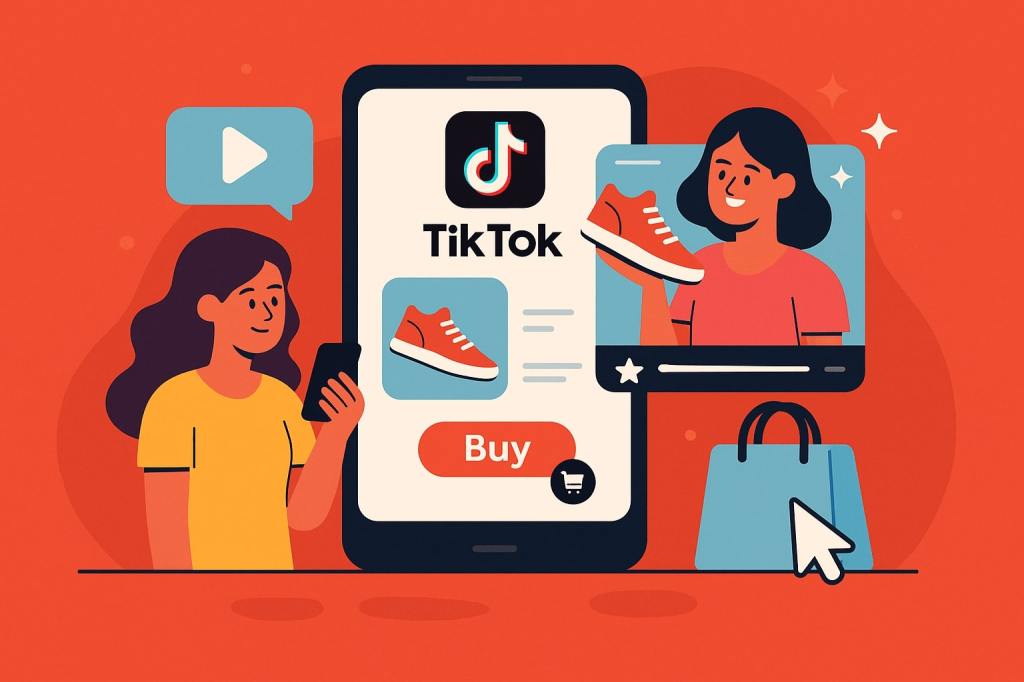
One of TikTok Shop’s biggest advantages is its ability to shorten the customer journey. A person can watch an entertaining video, see a product in action, learn how it works, and purchase it without leaving the app. This reduces the gap between “I like this” and “I want to buy this.” TikTok Shop’s seller resources describe its model as combining discovery with direct in-app purchasing through shoppable videos, livestreams, and product showcases.
Creators Are Becoming a New Sales Channel
Influencer marketing is not new, but TikTok Shop could take creator-led commerce further by making creators a direct part of the shopping journey. Instead of simply promoting products and sending audiences to an external website, creators can showcase products through videos and LIVE sessions connected directly to in-app shopping. This could make product recommendations more interactive and easier to measure. For brands, creators can become more than awareness partners—they can become an important part of product discovery and conversion.
LIVE Shopping Brings Back Real-Time Selling
Livestream shopping could also play a major role in reshaping e-commerce. During LIVE sessions, sellers and creators can demonstrate products, answer questions, offer recommendations, and interact with customers in real time. TikTok reported that brands and creators hosted more than 8 million hours of LIVE shopping sessions in the United States during 2024. The company has also highlighted LIVE commerce as a way for businesses to gather direct customer feedback while creating more engaging shopping experiences.
Small Businesses Could Compete More Effectively
TikTok Shop may also lower some of the visibility barriers faced by smaller businesses. On traditional e-commerce platforms, brands often compete through search rankings, advertising budgets, and established brand recognition. On TikTok, a compelling product video can potentially reach a large audience regardless of whether the business is already well known. In 2025, TikTok reported that sales to small U.S. businesses on TikTok Shop had grown 70% year over year, showing the potential of discovery-led commerce for smaller sellers.
Content Is Becoming the New Digital Storefront
A traditional online store is designed around product pages, categories, and search bars. TikTok Shop suggests a different future where content itself becomes the storefront. A short video can introduce a product, explain its benefits, show how it is used, and encourage a purchase within seconds. This means brands may increasingly need to think like media companies, producing entertaining and educational content alongside traditional product marketing. The businesses that create content people genuinely want to watch may have a stronger advantage.
The Rise of Social Commerce Is Becoming Global
TikTok Shop’s expansion shows that content-driven commerce is moving beyond a single market. The platform has continued expanding across Europe and other regions, while reporting growth in sellers, buyers, and transaction activity. In May 2026, TikTok announced further expansion into Austria, Belgium, the Netherlands, and Poland, joining several existing European markets. This broader rollout suggests that social commerce is becoming an increasingly important part of the global digital retail landscape.
The Data Shows Strong Consumer Interest
TikTok’s recent figures indicate that product discovery through content is gaining momentum. In a 2025 announcement, TikTok said its U.S. TikTok Shop sales had increased 120% compared with the same period a year earlier. The company also cited research showing that 83% of surveyed TikTok Shop shoppers had discovered a new product and 70% had discovered a new brand through the platform. These figures should be viewed as platform-reported data, but they still highlight the growing importance of content-led product discovery.
Conclusion
TikTok Shop could reshape e-commerce because it changes the traditional shopping journey from search, click, and buy to watch, discover, trust, and buy. By combining short-form video, creators, LIVE shopping, personalized recommendations, and in-app checkout, it creates a more interactive path between entertainment and commerce. Traditional e-commerce platforms are unlikely to disappear, but the growing success of discovery-led shopping could push the entire industry toward more content-driven and socially connected experiences. For brands, the future may no longer be about simply having an online store—it may be about being discoverable wherever attention happens.


 digtimadminjorn