 digtimadminjorn
Introduction:
The Rise of AI-Powered Customer Service
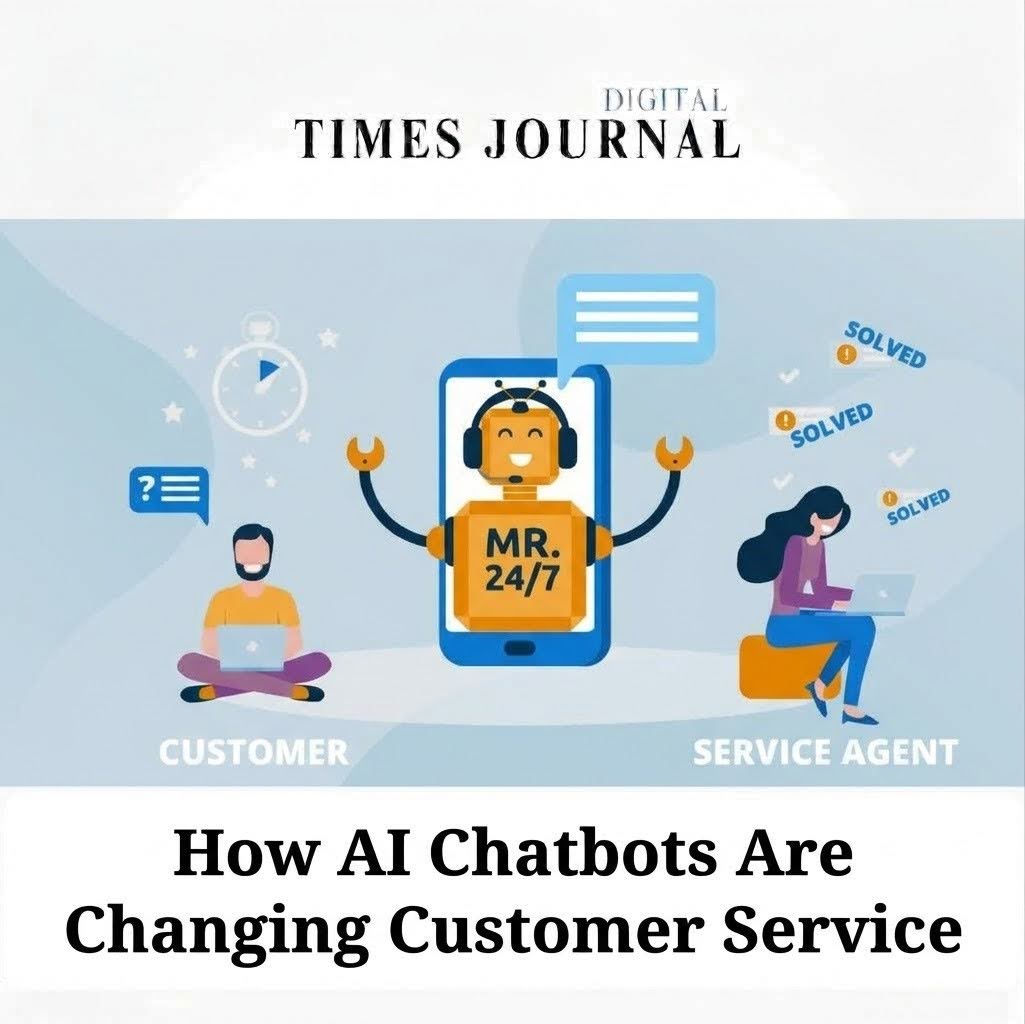
Customer service is entering a new era as AI chatbots and conversational AI become increasingly integrated into the way businesses communicate with customers. From answering frequently asked questions to helping users track orders and resolve basic issues, AI-powered chatbots can provide instant assistance across websites, apps, messaging platforms, and other digital channels. Unlike traditional support systems limited by business hours, AI chatbots can operate around the clock and handle multiple conversations simultaneously. Research published in Computers in Human Behavior identifies speed and 24/7 availability among the factors that can make chatbots valuable for customer service.
Faster Responses and 24/7 Support
One of the biggest advantages of AI customer service chatbots is their ability to respond almost instantly. Customers no longer have to wait for an available representative to answer simple questions about products, services, orders, account information, or business hours. AI chatbots can provide support at any time, including evenings, weekends, and holidays. This constant availability can improve convenience while allowing businesses to serve customers across different time zones. IBM notes that AI-powered customer service tools can provide real-time assistance and help businesses streamline support operations.
Handling Repetitive Customer Questions
Customer service teams often spend significant time answering the same questions repeatedly. AI chatbots can automate many of these routine interactions, such as order-status requests, return-policy questions, appointment information, password assistance, and frequently requested product details. This allows human representatives to spend more time on complicated cases that require judgment, empathy, or detailed problem-solving. According to Salesforce’s 2025 State of Service research, service teams estimated that AI was already handling around 30% of cases, with respondents expecting that figure to reach 50% by 2027.
More Personalized Customer Experiences
Modern AI chatbots are moving beyond simple scripted responses. With access to appropriate customer and business data, conversational AI can understand context and provide more relevant responses. A chatbot can potentially recognize previous interactions, understand what a customer is asking, recommend relevant information, and guide the user through the next step. This creates a more personalized customer experience than traditional FAQ pages. However, personalization should be carefully managed, with businesses maintaining appropriate privacy, security, and data-governance practices.
AI Chatbots Are Becoming More Capable
The development of generative AI and AI agents is expanding what customer service automation can do. Traditional chatbots generally followed predefined decision trees, while newer systems can understand natural-language questions and generate responses based on context. More advanced AI agents can also connect with business systems and perform certain tasks rather than simply providing information. IBM describes this shift from basic chatbot interactions toward AI systems capable of interpreting requests and working with tools and APIs to complete more complex tasks.
Supporting Human Customer Service Teams
AI chatbots are not necessarily replacing human customer service representatives; increasingly, they are being used alongside them. Chatbots can handle routine questions before transferring more complex or sensitive issues to a human agent. AI can also assist representatives by summarizing conversations, finding relevant information, suggesting responses, and reducing repetitive administrative work. Salesforce’s 2025 research found that service representatives using AI reported spending less time on routine cases, giving them more time for complex customer interactions.
Reducing Costs While Supporting Business Growth
Customer service costs can increase as a business gains more customers. Hiring additional staff can help, but scaling a human-only support model can be expensive and time-consuming. AI chatbots provide another way to handle high volumes of routine interactions without requiring a separate human response to every basic question. This can help businesses manage growing demand more efficiently. Gartner has projected that agentic AI could eventually automate a large share of common customer service issues, although such forecasts depend on technological development and successful implementation.
Accuracy, Privacy and Human Oversight Still Matter
Despite their potential, AI chatbots are not perfect. They can misunderstand questions, provide inaccurate information, struggle with unusual situations, or fail to recognize when a customer needs human assistance. Research on customer-service chatbots has highlighted limitations around accuracy and reliability, particularly for complex problems. Privacy and security are also important considerations when AI systems handle customer information. Gartner’s 2026 research found that customers using AI for service interactions still expect the option to reach a human agent when companies use AI.
The Future Is Human + AI Collaboration
The future of customer service is increasingly likely to combine automation with human expertise rather than depend entirely on one or the other. AI can provide speed, scale, and consistency, while human representatives remain important for empathy, negotiation, complex complaints, and situations requiring nuanced judgment. Gartner reported in 2025 that 95% of surveyed customer service leaders planned to retain human agents while determining how AI should be used. For businesses, the goal should be to design customer journeys where AI handles appropriate tasks and humans step in when their expertise adds greater value.
Conclusion:
AI Is Redefining the Customer Service Experience
AI chatbots are changing customer service by making support faster, more accessible, scalable, and increasingly personalized. Businesses can use conversational AI to answer routine questions, support employees, automate repetitive tasks, and provide customers with assistance around the clock. However, successful AI customer service requires more than installing a chatbot. Businesses need accurate information, strong data protection, thoughtful automation, human escalation, and continuous monitoring. As AI technology advances, the most effective customer service strategies will likely combine the efficiency of artificial intelligence with the empathy and judgment of human professionals.


 digtimadminjorn