 digtimadminjorn
Introduction:
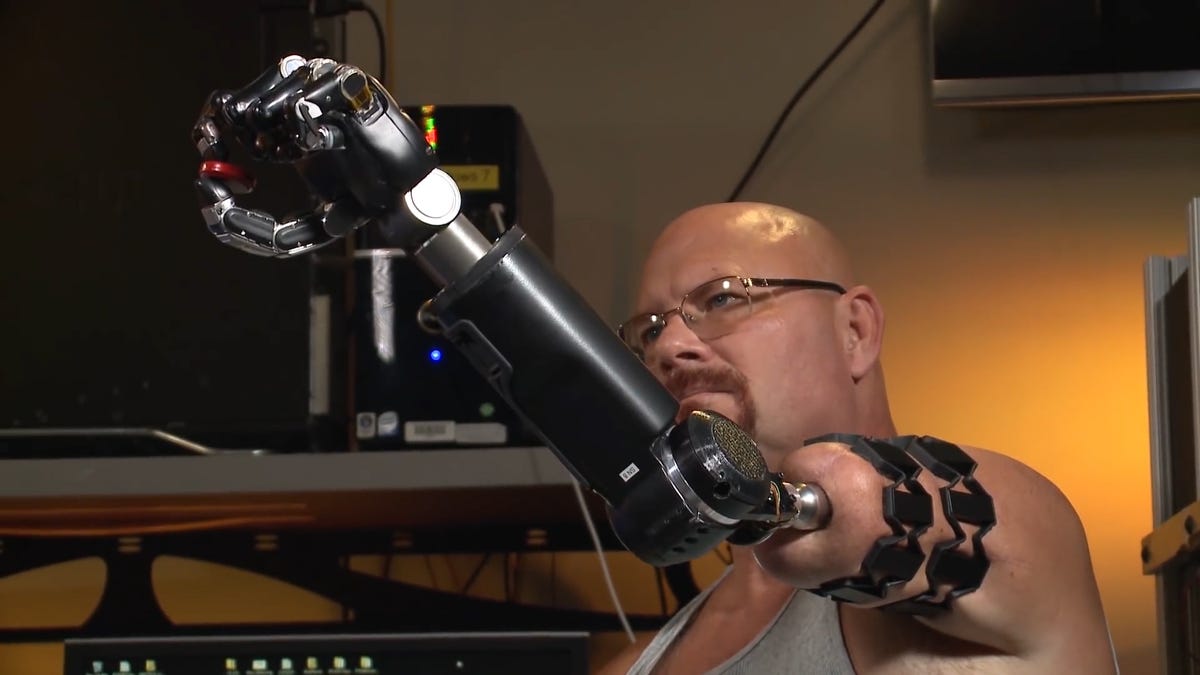
In the realm of medical technology, advancements are constantly being made to improve the lives of individuals with physical disabilities. One such groundbreaking innovation is Gesture-Controlled Prosthetics, a technological marvel that empowers amputees to regain dexterity, independence, and a sense of normalcy through intuitive movements.
Empowering Amputees through Gestures:
Traditional prosthetic devices have come a long way, offering mobility and support to those who have lost limbs. However, Gesture-Controlled Prosthetics take this concept several steps further. These innovative devices harness the power of human gestures, enabling users to control their prosthetic limbs through intuitive movements, such as muscle contractions or nerve signals.
How Gesture-Controlled Prosthetics Work:
Electromyography (EMG) Sensors: EMG sensors are placed on the remaining muscles near the amputation site. These sensors detect electrical signals produced when the user attempts to move their missing limb.
Pattern Recognition: Advanced algorithms analyze the EMG signals to recognize specific muscle patterns associated with different gestures. These patterns are then translated into corresponding movements of the prosthetic limb.
Real-Time Control: The prosthetic limb responds in real-time to the user’s intentions, mimicking natural movements with precision. This intuitive control allows users to perform complex tasks, such as grasping objects or even playing musical instruments.
Benefits and Impact:
Gesture-Controlled Prosthetics offer a myriad of benefits that extend beyond physical mobility:
Enhanced Quality of Life: Users regain independence and are able to perform daily tasks with ease, boosting their confidence and self-esteem.
Natural Movement: The fluid and natural movements enabled by gesture control closely mimic the motions of a biological limb, reducing the learning curve and promoting a sense of embodiment.
Improved Rehabilitation: Gesture-controlled devices can assist in rehabilitation, allowing users to engage in specific exercises that aid in muscle development and coordination.
Adaptability: These prosthetics can be customized to fit individual needs and preferences, adapting to various lifestyles and requirements.
Technological Integration: Gesture-controlled prosthetics can be integrated with other technologies, such as virtual reality, enabling users to experience a full range of motion and interactive experiences.
Challenges and Future Prospects:
While Gesture-Controlled Prosthetics hold immense promise, challenges remain. Fine-tuning gesture recognition algorithms and ensuring reliable connectivity are ongoing areas of research. Furthermore, affordability and accessibility are crucial factors in making this technology widely available to those who need it.
As technology continues to evolve, the future of Gesture-Controlled Prosthetics is bright. Advancements in neuroprosthetics and brain-machine interfaces may lead to even more seamless and intuitive control methods. Ultimately, these innovations are reshaping the lives of amputees, offering newfound possibilities and redefining the boundaries of human potential.
Conclusion:
Gesture-Controlled Prosthetics mark a remarkable convergence of technology, medicine, and human resilience. By enabling intuitive and natural movements of artificial limbs, these devices are not only restoring physical abilities but also empowering individuals to embrace life to the fullest. The ongoing progress in this field is a testament to the incredible capacity of technology to enhance the human experience.


 digtimadminjorn