 digtimadminjorn
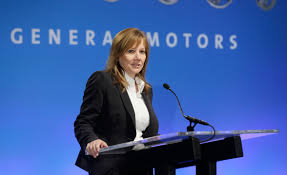
Mary Barra, the pioneering CEO of General Motors (GM), is a trailblazer in the automotive industry. As the first woman to lead a major global automaker, her journey is not only inspirational but also a testament to her vision and leadership. This article delves into Mary Barra’s career, her impact on GM, and her influence on the broader automotive landscape.
Early Life and Career Beginnings
Mary Barra was born on December 24, 1961, in Waterford, Michigan. Her connection to General Motors began early, as her father was a die maker for Pontiac, a division of GM. This familial tie to the automotive world likely influenced her decision to join the company at just 18 years old as a co-op student while she pursued her degree in electrical engineering at Kettering University (formerly General Motors Institute).
After completing her bachelor’s degree, Barra went on to earn an MBA from Stanford Graduate School of Business, supported by a GM fellowship. This combination of technical and business education laid a strong foundation for her future leadership roles within the company.
Climbing the Ranks at General Motors
Barra’s career at GM is marked by a series of significant roles that showcased her versatility and leadership capabilities. She held various engineering and administrative positions, gaining a comprehensive understanding of the company’s operations. Notable roles included Vice President of Global Manufacturing Engineering, Vice President of Global Human Resources, and Senior Vice President of Global Product Development.
In these positions, Barra demonstrated her commitment to quality, efficiency, and innovation. Her leadership in product development was particularly impactful, as she focused on improving vehicle quality and reducing product development times.
Becoming CEO
In January 2014, Mary Barra made history by becoming the CEO of General Motors, the first woman to hold this position in a major global automaker. Her appointment came at a challenging time for GM, which was recovering from bankruptcy and facing the ignition switch scandal. Barra’s leadership during this period was crucial in steering the company through crisis and rebuilding its reputation.
Vision for the Future
Under Barra’s leadership, GM has embarked on an ambitious journey towards a future defined by electric and autonomous vehicles. She has been a vocal advocate for sustainability and innovation, driving GM’s commitment to an all-electric future. This vision is exemplified by the launch of the Chevrolet Bolt EV and the development of GM’s Ultium battery technology, which promises to revolutionize electric vehicle production.
Barra has also been instrumental in fostering partnerships and investments in autonomous vehicle technology. GM’s acquisition of Cruise Automation and subsequent investments have positioned the company as a leader in the race towards self-driving cars.
Impact and Legacy
Mary Barra’s tenure as CEO has not only transformed GM but also set a new standard for leadership in the automotive industry. Her emphasis on diversity, inclusion, and ethical business practices has influenced the corporate culture at GM and beyond. Barra’s leadership style, characterized by transparency, accountability, and a forward-thinking mindset, continues to inspire future generations of leaders.
Conclusion
Mary Barra’s journey from a co-op student at General Motors to its CEO is a remarkable story of perseverance, vision, and leadership. Her impact on the automotive industry and her role in shaping the future of transportation underscore her status as a pioneering figure in business. As GM continues to innovate and evolve, Barra’s influence will undoubtedly leave a lasting legacy.


 digtimadminjorn